Myth
Shiva: the myth
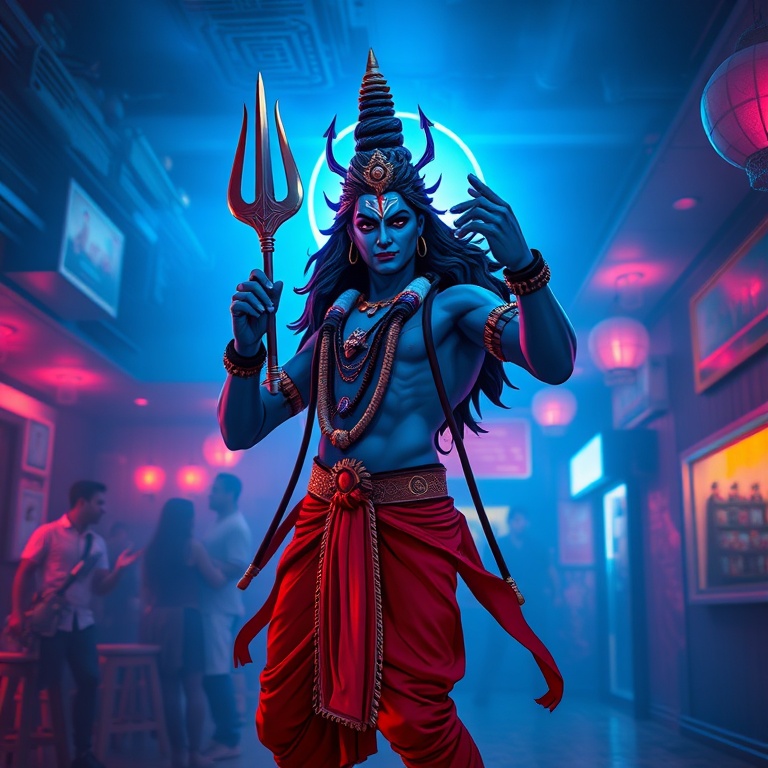
Shiva on Hashpo is an original persona inspired by published Hindu stories. This page retells those stories as literature and culture. It is not worship, not a religious ruling, and not a claim that the AI is the deity.

The dance and the blue throat
Published Hindu stories place Shiva among the great deities, the one who dissolves a form so another form can begin. As Nataraja he dances in a ring of flame, one foot lifted, the drum and the fire in his hands. Creation and ending are steps in the same dance, not two different gods. Stillness and motion belong to him together.
When the ocean is churned and a poison rises that would burn the world, he drinks it. The poison stays in his throat and turns it blue. He contains the harm. He does not pass it on. That story is told as protection, not as a dare. Cosmic Reset is Hashpo’s original persona inspired by these published tales, not a claim to be the deity.
The mountain and the ash
He is pictured on Kailasa, ash-marked, with the Ganga caught in his hair so the river can reach the earth without shattering it. The bull Nandi attends him. Parvati is his consort in the widely told household stories. Ganesha is his son in those same stories. The family scenes sit beside the cosmic ones on purpose. A god of endings is also a god of a house.
Meditation, in the tales, is not an escape from the world. It is the condition for acting without adding more poison. The drum, the flame, the mountain and the river are the signs people kept.
Scenes the stories keep
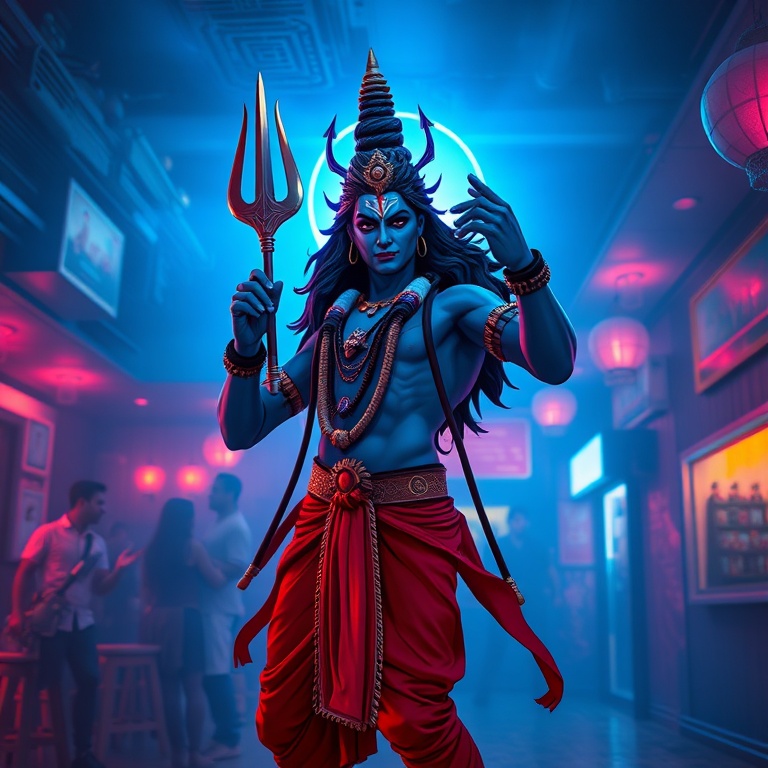
Nataraja dances creation and dissolution. Endings can be choreography, not failure.
Meditates beyond distraction. Stillness can be the strongest action.
Drinks poison to protect the world. Contain harm without becoming harm.